
Making Clean Water Affordable Everywhere, for Everyone
4 min read
Wed 22 Jul 2026
Eden Tech
Most seawater desalination plants recover only 30–40% of what they process. Genesis recovers over 80% — more than double the industry standard — and that changes what clean water costs.
Hunter Manz, Founder and CEO, Eden Technologies
We are facing a global freshwater crisis.
Earlier this year, UN researchers warned that the world has entered an era of “water bankruptcy,” where decades of overwithdrawal from rivers, lakes, and aquifers have damaged natural water systems to the point where restoring them is either impossible or prohibitively expensive. Four billion people, almost two-thirds of the world’s population, experience severe water scarcity for at least one month each year. Over two billion people live in countries where water supply is inadequate. By 2030, demand for freshwater will outpace supply by 40%. The problem isn’t a lack of water. It’s a lack of accessible freshwater, where and when it’s needed. About 97% of Earth’s water sits in the oceans. Of the remaining 3%, most is locked in glaciers and ice caps, leaving only about 0.5% of all water on the planet as usable freshwater.
Desalination has long been treated as the obvious answer. It’s why wealthy Middle Eastern nations already rely on it to meet their water needs. But for most of the world, desalination remains too expensive to be a real solution.
I’ve spent my career trying to change that, to make clean water available to everyone, not just those who can afford it. It’s one of the defining challenges of our time.
The real problem: desalination wastes most of what it processes
The core issue with conventional desalination is recovery, the percentage of seawater that actually becomes clean freshwater. Most seawater plants recover only 30-40%. For every 100 gallons that enter the plant, just 30 to 40 gallons come out as drinking water. The other 60 to 70 gallons become concentrated brine, typically dumped back into the ocean or injected underground.
That inefficiency is what makes desalination so expensive. Large desalination plants can cost more than $1 billion to build and over $50 million a year to operate. But most of the water they process never becomes freshwater. That means plants spend heavily pumping, pressurizing, and treating water that is ultimately discharged as brine.
To make desalination truly affordable, recovery must improve dramatically.
Tracing the problem to its root
We spent years studying the physical limits of conventional systems, and traced the low recovery to two root causes: inefficient pressure generation and filter clogging.
Higher recovery requires pushing water through reverse osmosis filters at much greater pressure. Conventional systems can’t generate that pressure efficiently. And pushing more water through the filters accelerates salt buildup, clogging them faster. Fixing one problem without the other gets you nowhere, while solving both required designing an entirely new mechanical system from scratch.
It took us nearly a decade to get there. We put reverse osmosis filters inside a spinning centrifuge, and in doing so, eliminated the constraints that had defined this industry for fifty years.
Introducing Genesis
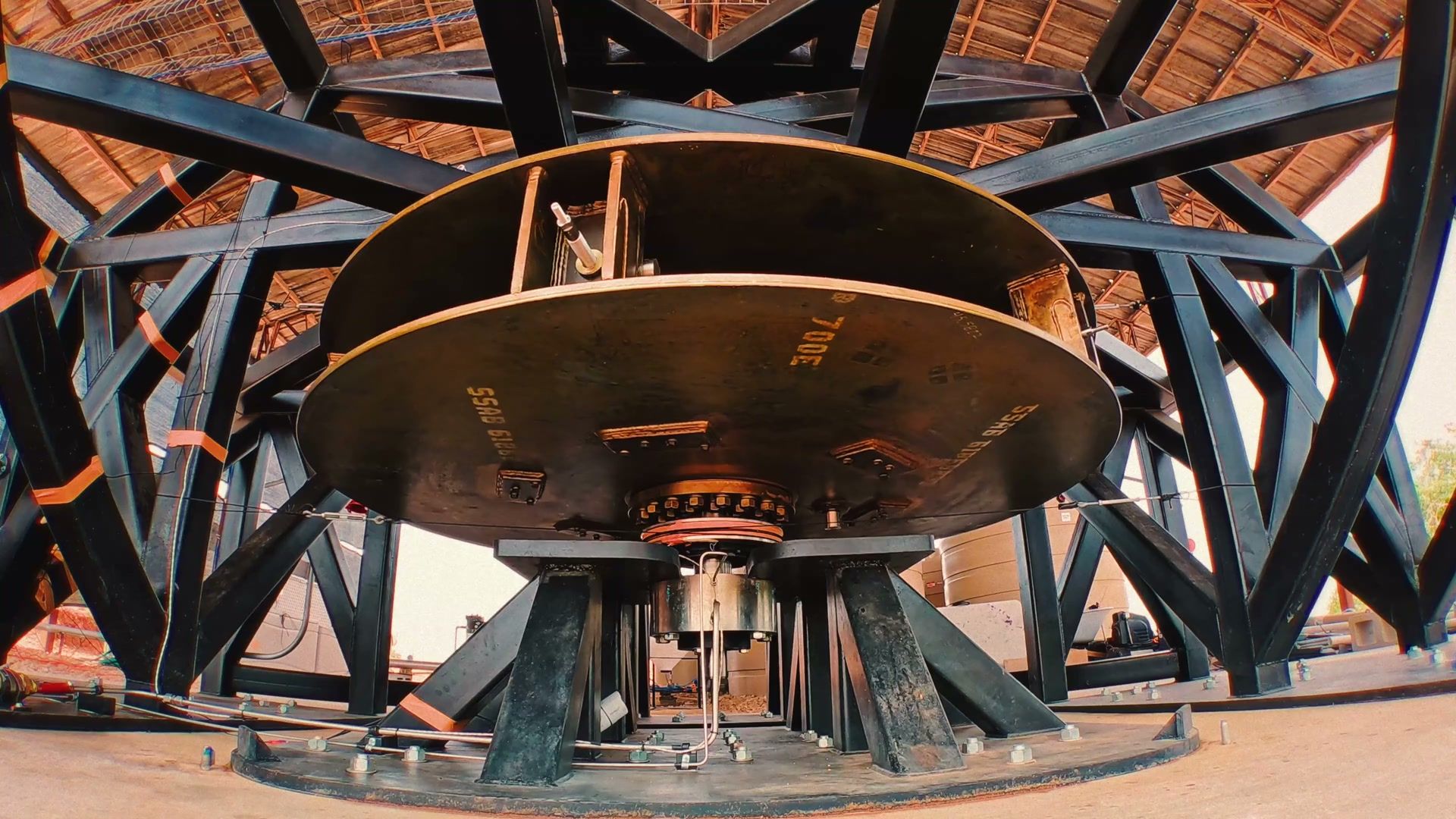
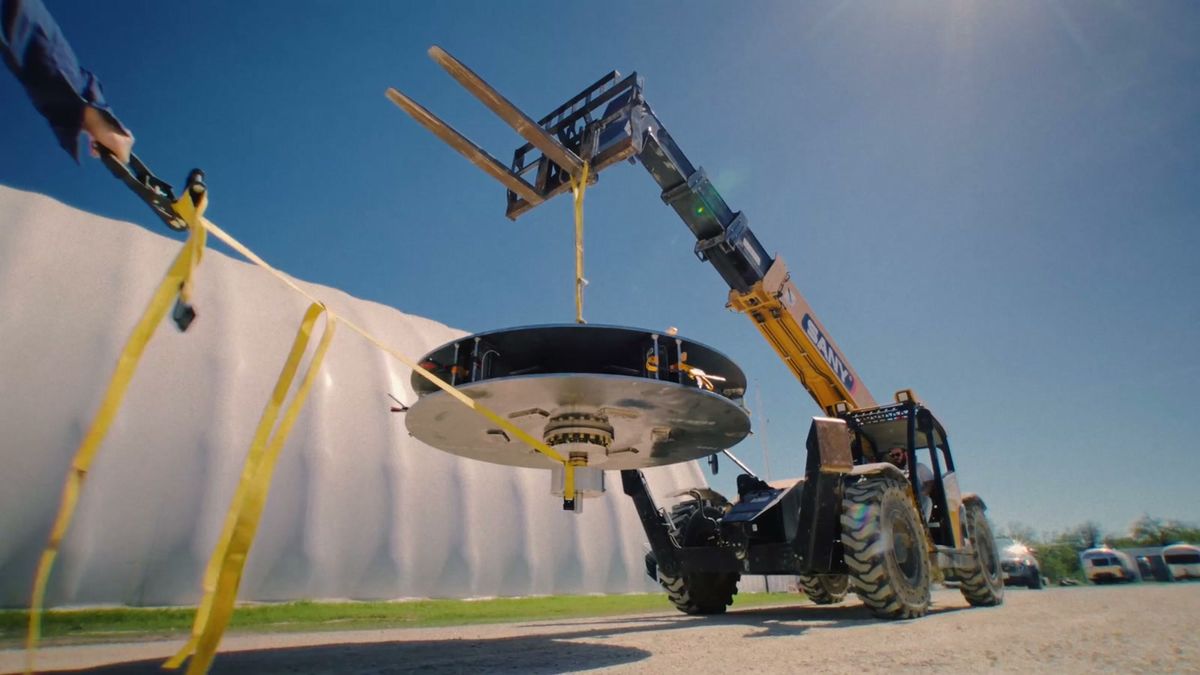
That work became Genesis: a reverse osmosis centrifuge that can recover over 80% of the water it processes, more than double the industry standard.
Genesis draws in saltwater and uses rotation to accelerate it toward the filters, generating high pressure far more efficiently than conventional pumps. Because the filters sit inside the spinning body, the water tumbles through the system, creating turbulence at the filter surface. That turbulence scrubs the filters continuously, preventing the clogging that limits conventional plants. The result: substantially more clean water, produced with greater energy efficiency.
Why recovery changes everything
Higher recovery doesn’t just mean more freshwater from the same source, it means far less concentrated brine left to manage. That’s especially transformative for brackish groundwater. There’s enough brackish water to supply the world for more than 1,000 years, but conventional treatment leaves behind a waste stream that’s often too costly to dispose of. By recovering most of the water and concentrating what’s left into a much smaller volume, Genesis makes these resources economical to develop, and opens a practical path to brine valorization.
Instead of a costly waste stream, the concentrated brine Genesis leaves behind becomes a source of mineable, valuable minerals. Revenue from those minerals can offset treatment costs and push the price of freshwater down further still. Eliminating the brine stream could also eliminate the need for discharge permits, removing one of the biggest obstacles to the widespread deployment of desalination.
Commercial roadmap
This technology applies broadly, from municipal desalination to the water challenges facing industries like oil and gas and mining. Our long-term roadmap includes municipal water development, data center water supply, brine mining, and lithium extraction.
Our first market is the Texas oil and gas industry, part of a broader U.S. sector that generates nearly one trillion gallons of ultra high salinity water each year. We’re already seeing more than $150 million in potential system sales in this sector alone.
Our mission
Our mission is to secure and protect freshwater supplies for the years ahead, and ultimately to make clean water available everywhere on Earth, by extracting more freshwater out of every gallon of saltwater, and making that water dramatically less expensive to produce.
We look forward to sharing more of our journey in the coming weeks and months. We hope you’ll join us.
— Hunter Manz, Founder and CEO, Eden Technologies, Inc.